
Speak to us 01784 222 304
or Make a Booking
Join the Dyslexia Guild

Archive:

Speak to us

01784 222 304

or Make a booking

Complete the online booking form to
enrol on one of our training courses

‘For 25 years I pretended to read: Now I can, thanks to Read Easy’

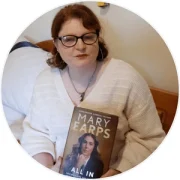
A headshot of Paula holding her copy of All In by Mary Earps


Paula Randall has dyslexia and slipped through the net at school, being diagnosed a matter of weeks before her GCSEs. It was only in her early 40s that she learned to read, with the help of national adult reading charity Read Easy.

Paula is now a Reading Ambassador for the charity and shares her story to inspire and support others.

“I want other people to think: If she can learn to read, I can too. If my story helps even just one person, I’ve done what I needed to do”, she says.


Read more

How Understanding Screen Reading Can Help Dyslexic Boys Engage with Books

A boy sits on the sofa looking at his phone

Screen reading is often thought to be the reason for shorter attention spans and poorer reading skills in children and teens.

Yet, while print reading is associated with deeper comprehension than screen reading in many contexts, its superiority over screen reading is not absolute. Nick Morgan-Baker argues that we need to meet young readers where they are and that digital content can be an important bridge to print reading for some individuals, especially boys who have dyslexia or who are reluctant readers.

By blending digital and print media in authentic reading projects, classrooms can foster what Maryanne Wolf calls “bi-literate brains“, equipping students to navigate deep analogue meaning accessed through print, alongside fast digital skim reading. 

Read more

Learning to Read in My 30s: How My Daughter Inspired My Reading Journey

Stephie headshot

   
Across England, an estimated 2.4 million working-age adults either cannot read, or struggle to do so. For many, the weight of keeping this a secret creates decades of shame and low self-esteem.

Last week I had the pleasure of chatting to Stephie Bradshaw. Stephie was diagnosed with dyslexia aged 11 and left school pretty much only able to understand three-letter words.

She believed she would never read fluently, but with the support of national adult reading charity, Read Easy, she learned to do so when she was 33 and pregnant with her daughter. Now, Stephie is keen to share her story in the hope it will inspire others.

Read more

Why I Wanted to Become an Adult Reading Coach: The Hidden Reality of Adult Literacy Needs

the Read Easy logo

   
Helping adult learnersKay Vallely works for the Shropshire Hills group as a volunteer coach for national adult literacy charity Read Easy UK. She is also a Volunteer Referrals Networker on their management team.

  
She explains why she got involved in volunteering, what the role of an adult reading coach involves, and how studying with Dyslexia Action is helping to support her work.
Read more

What’s Metaphor Meant For in the Classroom?

A conceptual image of several hands holding different pieces of tangled string

   
Could the approaches we use to help our most vulnerable learners sometimes hold them back? The well-intentioned goal of making language accessible in the classroom for autistic and ELL pupils risks embedding an absolute and inflexible practice and literal bias, says Nick Morgan-Baker, Dyslexia Action Tutor, member of The Dyslexia Guild, and Local Authority SEND Adviser.

Nick’s article first appeared in The Dyslexia Review, Spring 2026. A condensed version appears below.
Read more

Course review: Adrian Davis, Study Skills Tutor and Learning Support Specialist

A headshot of Adrian

  
Adrian is a dedicated learning support specialist at the University of Wales Trinity Saint David. He recently completed the Level 5 CPD Certificate in Supporting Adults with Dyslexia and Co-occurring Difficulties, which also qualified him for ADG FE/HE membership with The Dyslexia Guild.

We caught up with him as he shared his journey from higher education lecturer to becoming a specialised study skills tutor. Adrian shared what he finds so rewarding about supporting dyslexic students and why he prefers being a “guide on the side” to “sage on the stage”.

Read more

Course Review: Shelley England, Study Skills SpLD Tutor, (Non-Medical Helper)

a headshot of Shelley England

After twenty years in the classroom and a successful tenure as a Headteacher at a school with enhanced specialist provision for autism, Shelley England left her role in leadership to train as a psychoanalyst.

While training, she wanted to take on a position that would allow her to continue supporting young adults with additional needs. Her search led her to the role of a Specialist One-to-one Study Skills and Strategy Support – Specific Learning Difficulties (SpLD), also known as Non-Medical Helper or Study Skills SpLD tutor in Higher Education.

Shelley chose Dyslexia Action’s Level 5 CPD Certificate in Supporting Adults with Dyslexia and Co-occurring Difficulties as it would qualify her to practice as a Study Skills SpLD tutor by awarding her Associate FE/HE of The Dyslexia Guild membership after completing just three online CPD Units of the six Unit Certificate.

Read more

Schools White Paper Proposals to Reform SEND Provision: Our Response

An image showing the schools white paper   
We were encouraged by the proposals in the Schools White Paper to support more children with special educational needs within mainstream settings. The announcement of a £1.6bn fund to be made directly available to schools to become more inclusive is a welcome step forward.

You can read a summary of the major changes on our sister company, Real Training’s website here.

Notably, however, there was little direct mention of specialist literacy teachers or dyslexia per se in the proposals. The continual shortage of highly trained dyslexia and other special learning difficulty (SpLD) professionals is an ongoing concern, and for the Experts at Hand service to be successful, it is our view that this should include improved early access to specialist literacy teachers. Many of these were trained with funding from the Labour Government 17 years ago in the wake of the Rose Review (2009) and constitute a large resource. Findings from the No to Failure (2009) study indicate that literacy interventions designed and supervised by dyslexia specialists effectively mitigate long-term reading and writing challenges. Furthermore, the research highlights that early intervention offers the best outcomes for pupils as well as representing the most cost-efficient strategy for schools.

Read more

Dyslexia Awareness Week 2025


It’s Dyslexia Awareness Week 2025! This year we’re particularly focussing on our dyslexic learners aged sixteen and above. With this in mind, we asked our network of learners and experts with dyslexia to send in some of their favourite study hacks. 

We hope these top tips can help anyone who is engaged in any kind of further or higher education; whether it’s an apprenticeship, undergraduate/postgraduate-level study or CPD.

Congratulations go to Helen, an inclusion leader and dyslexia assessor and Elizabeth, a secondary school teacher, who have won our prizes for the best study tips! 

You can watch all the tips in the post below.

Read more

Enter our video competition and share your study hacks!

a banner advertising our competition - send in your video tips for studying with dyslexia

Send your videos to imogen.barber@realgroup.co.uk  by Monday 29th September!


The best study hacks for dyslexic learners – send in your videos!

Dyslexia Awareness Week is coming up in October and we want to hear from learners who have dyslexia about their top study hacks! The best three will receive a £50 voucher each – but more than that you’ll also be helping our wider learning community.

Are you dyslexic or do you work with a dyslexic student (16+) at college, university or in another higher education or FE setting? Have you come across a smart way to make learning more efficient?

If so, we’d love to hear from you! Send us a short selfie video (1 min max) and tell us more. We’ll be sharing your videos on our social media channels. 

Send your videos to imogen.barber@realgroup.co.uk  by Monday 29th September. Full terms and conditions are below. Read more